Why Singapore Buyers Are Comparing NMN and Transfer Factor
Walk into any health supplement conversation in Singapore in 2026 and you'll inevitably hear two names: NMN and Transfer Factor. NMN — riding the wave of David Sinclair's longevity research and popularised locally by brands like For Youth and Xandro Lab — has exploded in the Singapore biohacking and anti-ageing market. Meanwhile, Transfer Factor has quietly accumulated a 27-year clinical history through 4Life Research, with particular traction among athletes and families looking for immune resilience rather than aesthetic anti-ageing.
The result? Singapore health enthusiasts are now searching "NMN vs Transfer Factor" in growing numbers — often because they've been recommended both by different sources and want to understand which is actually right for their goals, or whether they genuinely need to take both.
This guide gives you the definitive, scientifically grounded answer. We'll cover the mechanisms, the evidence, the costs, and — critically — who should choose which.
Quick verdict: NMN and Transfer Factor are not competitors — they address different biological systems. NMN targets your cellular energy infrastructure. Transfer Factor educates your immune system. The strongest case is for using both together, which is exactly what 4Life's AgePro product delivers in a single stack.
What Is NMN? The NAD+ Precursor Behind the Anti-Ageing Hype
NMN stands for Nicotinamide Mononucleotide. It is a naturally occurring molecule found in trace amounts in foods like broccoli, avocado, and edamame — but in concentrations far too small to impact NAD+ levels meaningfully through diet alone. As a supplement, NMN is taken in doses of 250–500mg daily specifically to raise levels of NAD+ (Nicotinamide Adenine Dinucleotide) inside your cells.
NAD+ is the molecule your mitochondria depend on to convert the food you eat into ATP — the actual energy currency that powers every biological process. But NAD+ does more than make energy:
- Activates sirtuins (SIRT1–SIRT7): These are longevity enzymes that regulate inflammation, stress resistance, mitochondrial biogenesis, and cellular repair. They require NAD+ to function. When NAD+ is low, sirtuin activity drops — and with it, the cellular resilience mechanisms they control.
- Powers DNA repair (PARP enzymes): Every time a cell sustains DNA damage — from UV radiation, exercise-induced oxidative stress, or normal metabolic activity — PARP enzymes consume NAD+ to repair the damage. High DNA repair demand can deplete NAD+ faster than it's produced.
- Drives mitochondrial efficiency: Mitochondria use NAD+ in the electron transport chain. Adequate NAD+ means efficient ATP production; declining NAD+ means your cells run inefficiently, producing more fatigue-inducing metabolic byproducts.
The problem David Sinclair and his Harvard lab popularised: NAD+ declines approximately 1–2% per year after age 35. By age 50, most adults have roughly 50% of the NAD+ they had at 20. This decline correlates strongly with reduced energy, slower recovery, increased inflammation, and the hallmarks of cellular ageing.
NMN supplementation — studied in both animal models and human clinical trials (published in Cell Reports Medicine, Nature Aging, and Frontiers in Aging) — has been shown to meaningfully raise blood NAD+ levels within 2–4 weeks of consistent use in humans.
What Is Transfer Factor? The Immune Education Molecule
Transfer Factor is a fundamentally different category of supplement — it is not a vitamin, mineral, herbal extract, or energy precursor. Transfer factors are small peptide molecules (typically 3–5 kDa in size) that are naturally present in mammalian colostrum (first milk) and egg yolk. Their biological purpose is one of the most sophisticated in nature: to transfer immune "intelligence" from mother to newborn.
In practical terms, transfer factors carry what immunologists call antigen-specific information — essentially a library of immune pattern recognition data encoded in molecular form. When you take Transfer Factor supplements, these peptide molecules are absorbed in the gut and interact with your immune cells, particularly Natural Killer (NK) cells and T-cells, "educating" them about threat patterns they may not have previously encountered.
Key mechanisms of Transfer Factor action:
- NK cell activation: Natural Killer cells are your immune system's rapid-response surveillance force — they identify and destroy virus-infected cells and abnormal cells without requiring prior sensitisation. Transfer Factor Plus Tri-Factor has been shown in an independent laboratory study to increase NK cell activity by up to 283% above baseline.
- Immune modulation, not stimulation: This is a critical distinction. Transfer factors don't simply stimulate the immune system to be more aggressive. They help calibrate it — boosting under-active responses and moderating over-active ones. This makes Transfer Factor appropriate for people with autoimmune tendencies or inflammatory conditions, where simple immune stimulants would be problematic.
- Pattern recognition education: Transfer factors encode information about pathogens and antigens. They effectively give your immune system a "head start" on recognition, compressing the time between infection and immune response.
4Life Research's Transfer Factor Plus Tri-Factor Formula combines bovine colostrum-derived transfer factors (UltraFactor XF) with egg yolk-derived transfer factors (OvoFactor) and ultra-filtered NanoFactor peptides — three complementary immune education sources covering a broader range of pathogen patterns than any single-source product.
NMN vs Transfer Factor: Full Head-to-Head Comparison
Here is where the two supplements genuinely differ — and where they overlap. This table is designed to help you make an informed decision based on your specific health goals.
| Category | NMN | Transfer Factor |
|---|---|---|
| Primary mechanism | Raises NAD+ levels; fuels mitochondrial ATP production and sirtuin activation | Educates NK cells and T-cells via immune peptide molecules; modulates immune response |
| Target system | Cellular energy infrastructure (mitochondria, DNA repair, longevity enzymes) | Immune system (innate and adaptive: NK cells, T-cells, cytokine balance) |
| Research base | Growing human trial data (2020–2026); strong animal models; Sinclair lab, Washington University, Tokyo University | 27 years of published research; independent NK cell activation studies; peer-reviewed journal citations for transfer factor mechanisms |
| Time to effect | 2–4 weeks for measurable NAD+ increase; 4–8 weeks for noticeable energy/recovery improvement | 4–6 weeks for immune resilience improvement; cumulative benefit builds over 60–90 days |
| Singapore price range (SGD) | $80–$180/month (generic NMN); AgePro ~$109 wholesale | Transfer Factor Plus: ~$89–$119 wholesale; Classic: ~$49–$69 |
| Side effects | Generally well-tolerated; occasional mild GI discomfort at higher doses; no flushing (unlike niacin) | Rare and mild; occasional temporary fatigue during initial immune recalibration; not recommended during active autoimmune flares without physician guidance |
| Suitable for autoimmune conditions? | Generally yes (no immune stimulation); consult physician | Usually yes — modulates rather than stimulates; evidence exists for positive effects in certain autoimmune conditions |
| Best for | Energy, anti-ageing, metabolic health, athletic performance, NAD+ restoration in 35+ adults | Immune resilience, post-exercise immunity, illness prevention, frequent travellers, athletes in high competition load |
| Singapore availability | iHerb, Shopee, Lazada (generic); 4Life MyShop (AgePro) | 4Life MyShop (authorized distributor); limited availability in local retail |
| Stackable? | Yes — no interactions with Transfer Factor; complementary systems | Yes — no interactions with NMN; complementary systems |
Where NMN Excels: Energy, Longevity, and Metabolic Health
NMN's greatest strengths lie in addressing the fundamental cellular energy problem that accelerates with age. For Singapore adults over 35 noticing that they're not recovering from workouts as quickly, feeling afternoon energy crashes despite good sleep, or simply feeling "older" than their fitness level suggests — NAD+ decline is frequently the underlying cause.
1. Sustained Cellular Energy
Unlike caffeine or stimulant-based energy supplements that borrow energy from tomorrow, NMN works at the mitochondrial level to restore actual energy production capacity. Users consistently report more stable, sustained energy throughout the day — less reliant on coffee spikes and less prone to afternoon slumps — after 6–8 weeks of consistent use.
2. Athletic Recovery Acceleration
NAD+ is consumed both during exercise (to fuel ATP production) and after exercise (to power DNA repair mechanisms responding to training-induced cellular stress). NMN supplementation effectively tops up this NAD+ pool, allowing recovery to proceed at full biological speed rather than being rate-limited by NAD+ availability. Clinical research in older adults showed measurable improvements in muscle oxygen utilisation with NMN supplementation.
3. Anti-Ageing at the Cellular Level
Sirtuin activation is arguably NMN's most compelling longevity mechanism. SIRT1, SIRT3, and SIRT6 in particular regulate telomere maintenance, mitochondrial biogenesis, and inflammation control. By keeping NAD+ levels elevated, NMN keeps these longevity switches "on" — a state that declines naturally but not inevitably with age.
4. Metabolic Health
NMN has shown promising effects on insulin sensitivity and glucose metabolism in early human trials. For Singapore adults dealing with pre-diabetic indicators or metabolic syndrome — a growing concern given Singapore's high HOMA-IR rates — NMN's effect on mitochondrial efficiency may support better glucose utilisation at the cellular level.
Where Transfer Factor Excels: Immune Education and Illness Prevention
Transfer Factor's strengths are entirely on the immune side — but within that domain, its mechanism is more sophisticated than most immune supplements on the market.
1. Post-Exercise Immune Suppression Window
Athletes and serious exercisers face a well-documented phenomenon: intense training temporarily suppresses immune function for 3–72 hours post-exercise (the "open window" theory). This is why runners frequently get sick after marathons, and why HYROX competitors often catch colds the week following competition. Transfer Factor directly addresses this by keeping NK cell activity elevated even during the post-exercise immune dip.
2. Illness Prevention — Not Just Treatment
The most distinctive feature of Transfer Factor is its preventive nature. It doesn't treat illness — it trains your immune system so that it responds faster and more effectively when a threat is encountered. This education-based approach means the benefit accumulates over time, making Transfer Factor particularly valuable as a daily supplement rather than something taken only when you feel sick.
3. Immune Modulation — Critical for Autoimmune and Inflammatory Conditions
Unlike echinacea or Vitamin C mega-dosing — which broadly stimulate immune activity — Transfer Factor helps calibrate the immune response. It can upregulate an under-responsive immune system or help moderate an over-reactive one. This bidirectional modulation is rare in supplement science and explains why Transfer Factor has been studied in contexts as diverse as immune deficiency, chronic fatigue, and autoimmune conditions.
4. Year-Round Protection in Singapore's Disease Environment
Singapore's year-round warm, humid climate supports continuous circulation of respiratory viruses, including influenza and various coronaviruses. There is no "flu season" respite. Singapore residents are effectively in a year-round pathogen environment — which is exactly what Transfer Factor's continuous immune education is designed to address.
Where NMN and Transfer Factor Overlap
Despite addressing different systems, NMN and Transfer Factor share meaningful common ground in their downstream effects:
- Cellular health and longevity: Both support cellular resilience — NMN through NAD+-powered repair and energy, Transfer Factor through immune surveillance that clears damaged and senescent cells.
- Athletic recovery: Both reduce the physiological cost of intense exercise — NMN by accelerating cellular energy restoration, Transfer Factor by preventing post-exercise immune suppression.
- Overall wellness and vitality: Users of both supplements consistently report improved general wellbeing, energy, and reduced sick days — effects that emerge from different mechanisms but converge on similar outcomes.
- Long-term health investment: Neither supplement is a quick fix. Both deliver their greatest benefits through consistent daily use over months — rewarding the kind of disciplined supplementation protocol that fits naturally alongside a serious training or longevity lifestyle.
The overlap insight: A healthy immune system and healthy cellular energy infrastructure are both required for true vitality. NMN ensures your cells have the energy to function at peak capacity. Transfer Factor ensures your immune system recognises and responds to threats without burning through cellular resources on prolonged infections. They are complementary, not redundant.
Can You Stack NMN and Transfer Factor Together?
Yes — and the case for stacking them is strong.
There are no known interactions between NMN and Transfer Factor. They act on different biological systems (cellular energy vs. immune education) through different molecular pathways. Taking both simultaneously does not create redundancy — it creates synergistic coverage across two of the most important health systems in the body.
The practical stack for Singapore users is:
- 4Life AgePro (NMN + Tri-Factor Formula): Morning, with breakfast. Provides NMN for all-day NAD+ support plus a foundational dose of transfer factors. This single product is the most convenient entry point to the combined stack.
- Transfer Factor Plus Tri-Factor: Morning or evening. Adds the full proprietary immune-support blend (zinc, cordyceps, maitake, shiitake, IP6) to the transfer factor foundation from AgePro — elevating NK cell activation to the maximum studied level.
What makes 4Life's AgePro particularly elegant is that it already combines NMN with the Tri-Factor Formula in a single product. This means users who begin with AgePro are already getting both cellular energy support and foundational immune education. For those who want to maximise immune coverage, adding Transfer Factor Plus to the AgePro protocol is the full stack.
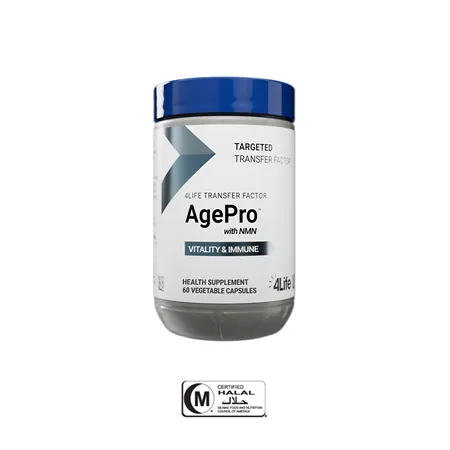
4Life AgePro — NMN + Transfer Factor Combined
The only NMN product in Singapore that combines NAD+ precursor science with 4Life's Tri-Factor immune education formula. NMN + Calcium AKG + Quercetin + Milk Thistle + Tri-Factor Formula.
~$109 wholesale | Retail $136
Buy AgePro on 4Life Singapore
Transfer Factor Plus Tri-Factor — Maximum NK Cell Activation
The flagship immune education supplement. Contains Tri-Factor Formula (bovine + egg yolk + NanoFactor) plus proprietary immune blend with cordyceps, maitake, zinc. 283% NK cell activation in studies.
~$89–$119 wholesale
Buy Transfer Factor PlusWho Should Choose NMN, Who Should Choose Transfer Factor, and Who Needs Both?
Choose NMN (AgePro) if:
- Your primary goal is energy and anti-ageing
- You are 35 or older and noticing slower recovery
- You are concerned about NAD+ decline and longevity
- You want better athletic performance and mitochondrial efficiency
- You are interested in metabolic health or weight management
- You train consistently and want cellular recovery support
Choose Transfer Factor if:
- You get sick frequently or take weeks to recover from illness
- You are an endurance athlete exposed to post-race immune suppression
- You have a demanding schedule with regular travel (airports, crowds)
- You have children in school who bring home frequent infections
- You are immunocompromised or recovering from illness
- You want the strongest immune education available from a supplement
Choose Both (AgePro + TF Plus) if:
- You want comprehensive cellular and immune coverage
- You are an active 35+ adult with serious health goals
- You race multiple events per year (marathon, HYROX, triathlon)
- You have experienced both energy decline and immune vulnerability
- You are committed to a long-term supplement protocol for longevity
- You want the most evidence-based cellular health stack available in Singapore
Singapore-Specific Considerations: Why Both Supplements Are Especially Relevant Here
Singapore's environment creates unique demands on cellular health and immune function that make the case for both NMN and Transfer Factor stronger than in temperate climates.
Heat and NAD+ Depletion
Training and working in Singapore's 31–34°C year-round climate places sustained thermal stress on the body. Heat stress activates PARP enzymes — the same DNA repair enzymes that consume NAD+ — even without exercise. A Singapore resident who walks to work, trains outdoors in the morning, and works in an air-conditioned office that swings between 18°C and 32°C multiple times per day is exposing their cells to thermal stress that depletes NAD+ at a rate that temperate-climate residents simply don't experience. This accelerated NAD+ depletion makes NMN supplementation more relevant — not less — in Singapore's climate.
Year-Round Racing Season = Continuous Immune Stress
Singapore's race calendar runs every month of the year. Unlike athletes in Europe or North America who have natural winter periodisation phases that allow immune system recovery, Singapore athletes are racing from January through December — IPPT, Sundown Marathon, SAFRA Bay Run, Women's Run, HYROX, BYD Singapore Marathon. Continuous high training loads with frequent races create a continuous post-exercise immune suppression cycle. Transfer Factor's ability to sustain NK cell activity during these windows is a meaningful advantage for Singapore's competitive athlete community.
Year-Round Pathogen Environment
The same tropical climate that creates training heat also sustains year-round viral and bacterial pathogen circulation. Singapore's public transport network, school system, hawker centres, and office density create high daily pathogen exposure. Unlike seasonal flu vaccines that target predicted strains, Transfer Factor's immune education approach provides pattern recognition across a broader immunological library — more resilient to the year-round diversity of circulating pathogens.
Coach Umar's Recommendation: My Personal Daily Protocol
After nearly a decade working with Singapore athletes and health-conscious adults, and having extensively researched both the NMN and Transfer Factor literature, my protocol recommendation is consistent: AgePro + Transfer Factor Plus is the most complete cellular health stack available in Singapore for adults over 35 with active lifestyles.
Here is my personal daily stack and the rationale:
- Morning with breakfast — 4Life AgePro (2 capsules): This delivers NMN for all-day NAD+ synthesis, Calcium AKG for mTOR pathway modulation, Quercetin as a senolytic, and foundational Tri-Factor immune education. It's the anchor of the stack.
- Morning with breakfast — Transfer Factor Plus Tri-Factor (2 capsules): Added to AgePro, this brings the full proprietary immune-support complex — including cordyceps for mitochondrial support, maitake and shiitake beta-glucans for immune modulation, and IP6 as an antioxidant — on top of AgePro's foundational transfer factors. Together these push NK cell activation to the maximum studied level.
- Post-training (within 30 minutes) — RioVida (60ml): The liquid antioxidant formula. When your cells are most permeable to nutrient uptake post-exercise, flooding them with concentrated fruit polyphenols (açaí, pomegranate, blueberry, elderberry) alongside liquid transfer factors maximises the cellular recovery window.
I've used this stack consistently since early 2026. The clearest measurable change: I have not missed a training session due to illness in over 6 months despite training 5–6 days per week and coaching clients across multiple gym environments. Energy quality — particularly mental clarity in the afternoon — improved noticeably from week 6 onwards. I attribute the energy improvement primarily to AgePro, and the illness resilience to the combined Transfer Factor load from both AgePro and TF Plus.
Affiliate disclosure: Links on this page are affiliate referral links through the 4Life distributor program. Purchases support this site. All opinions and recommendations are based on research and personal use — I only recommend products I personally use in my protocol.
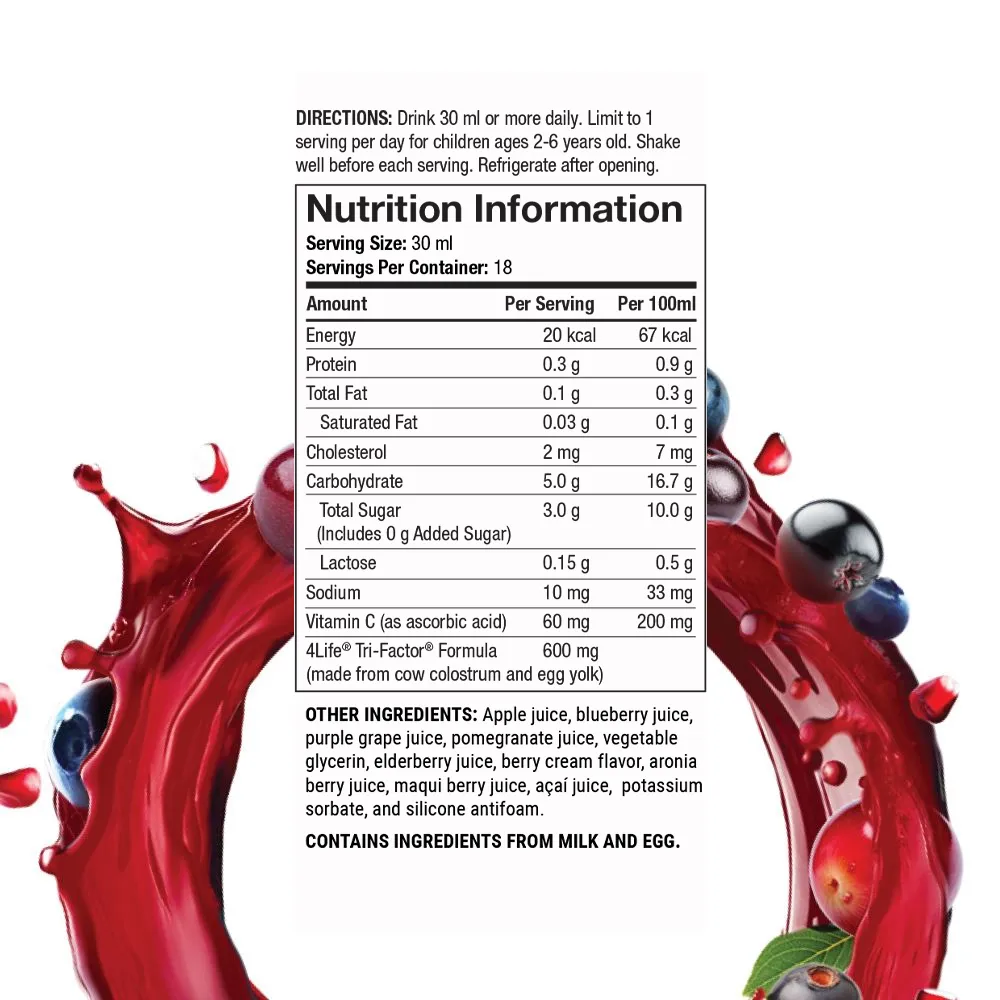
RioVida — Liquid Transfer Factor + Antioxidant Formula
Liquid format for post-training absorption. Concentrated açaí, pomegranate, blueberry, and elderberry polyphenols combined with 4Life's Tri-Factor Formula. The post-race recovery addition to any cellular health stack.
2-bottle pack — $154
Buy RioVida 2-Bottle PackFrequently Asked Questions: NMN vs Transfer Factor Singapore
Is NMN or Transfer Factor better for energy?
NMN is the clear winner for cellular energy. NMN raises NAD+ levels, which is the primary fuel molecule for mitochondrial ATP production. Higher NAD+ means your mitochondria run more efficiently, resulting in better sustained energy, especially during exercise. Transfer Factor does not directly influence energy metabolism — its action is focused on immune system education and NK cell activation. If energy is your primary goal, NMN (via 4Life AgePro) is the correct supplement.
Can I take NMN and Transfer Factor at the same time?
Yes, and many health-conscious Singapore adults do. NMN and Transfer Factor work through entirely different pathways — NMN raises NAD+ for cellular energy and DNA repair, while Transfer Factor educates NK cells for immune surveillance. There are no known interactions between them. 4Life's AgePro conveniently combines NMN with Transfer Factor components in a single product, making stacking simple. You can also pair AgePro with Transfer Factor Plus for maximum immune coverage.
How long does it take for NMN to work?
Measurable increases in blood NAD+ levels from NMN supplementation typically appear within 2–4 weeks. Energy and recovery improvements are usually noticed by most users within 4–8 weeks of consistent daily use. For longevity and anti-ageing benefits (mitochondrial biogenesis, sirtuin activation), a minimum of 3 months of consistent use is recommended before assessing results.
How long does Transfer Factor take to show results?
Transfer Factor works differently from NMN in terms of timing. Some users report fewer sick episodes within the first 4–6 weeks. The immune education process is cumulative — the longer you take Transfer Factor, the more refined your immune system's pattern recognition becomes. Athletes often notice the clearest benefit after a sustained loading period of 60–90 days, particularly in the form of fewer post-race illness events.
Is AgePro the same as taking NMN and Transfer Factor separately?
AgePro by 4Life contains NMN as its primary active ingredient combined with 4Life's Tri-Factor Formula (the transfer factor blend). This means AgePro already delivers both NMN and a foundational dose of transfer factors in one capsule. For users wanting maximum immune coverage, pairing AgePro with Transfer Factor Plus adds the full proprietary immune-support blend — making it the most comprehensive cellular and immune stack available through 4Life Singapore.
Ready to Build Your Cellular Health Stack?
All purchases via our authorised distributor link automatically apply wholesale member pricing — typically 20–30% below retail. No ongoing commitment required.