The Problem No One Talks About
Most fitness content talks about supplements from the perspective of someone trying to optimize performance. Bigger lifts, faster splits, better body composition. That's not why I take immune supplements.
I take them because my job requires it.
Think about what a full-time personal trainer's day looks like in Singapore. I am up at 5:30AM for a 6:30AM client at an ActiveSG gym in Jurong. By lunchtime I've coached three more sessions across two different gyms — commercial and condo. I train myself at 2PM before the evening rush. Then two more clients in the evening. That's six hours in shared gym environments, breathing recycled air, touching the same bars and benches as dozens of other people, and running my own cardiovascular system at a high output on top of it all.
There is no off-season in Singapore. January is as hot and as busy as August. There is no "winter wind-down" where training volumes drop naturally and the immune system gets a reset. The calendar year is one long, uninterrupted training season — for me and for my clients.
Getting sick even once a month means losing client sessions, losing income, losing training continuity, and losing credibility. Immune resilience is not optional for a working personal trainer in Singapore. It is an occupational necessity. That is the lens through which everything in this article is written.
What Exercise Does to the Immune System
Before I get into what I take, let's talk about the mechanism — because if you understand why exercise suppresses immunity, you'll understand why the usual advice ("just take vitamin C") misses the point.
The phenomenon is called the Open Window Effect, first described by sports immunologist Dr. David Nieman in the early 1990s. After intense or prolonged exercise, a window of immune vulnerability opens and stays open for anywhere from 3 to 72 hours, depending on how hard and how long you trained.
Three things happen inside that window:
- Natural Killer (NK) cell suppression. NK cells are your immune system's first-responder assassins — the cells that identify and destroy virus-infected cells before a full infection can establish itself. During and immediately after intense exercise, NK cells mobilize from blood into muscle tissue. Then, once exercise stops, blood NK cell counts drop to below-baseline levels for 3–6+ hours. Your immune surveillance patrol is temporarily unmanned.
- Cortisol spike. Intense exercise is a physiological stressor. Your body responds with a large cortisol release. Cortisol is catabolic — useful for performance, but directly suppressive to lymphocyte activity. The higher the training volume and intensity, the more cortisol, the deeper the suppression.
- Salivary IgA drop. Secretory Immunoglobulin A is the first line of mucosal defense — it coats the lining of your airways and gut and prevents pathogens from penetrating. After hard sessions, SIgA can drop 30–50%. That's the antibody gate into your respiratory tract left wide open at the exact moment you've just spent 90 minutes breathing shared gym air.
Read the full breakdown: We cover the Open Window Effect in detail — mechanism, timeline, and who's most at risk — in our dedicated article The Open-Window Effect: Why Athletes Get Sick After Heavy Workouts.
For someone training once or twice a week, this window is manageable. For a personal trainer doing 6–8 hours of physical activity daily across shared gym environments, the window is essentially never fully closed. You're suppressed from your own workout before the suppression from the previous client session has even resolved.
Why Singapore Makes It Worse
The Open Window Effect is a global phenomenon — but Singapore's conditions amplify every aspect of it.
Year-Round Heat and Humidity
Singapore sits at 33°C+ and 80–90% humidity for most of the year. Training in this environment produces a significantly higher cortisol stress response than the same session performed in temperate conditions. More cortisol means a deeper and more prolonged immune suppression window. Even a moderate 45-minute PT session outdoors at East Coast Park at 7AM carries a higher immune cost here than an equivalent session in a London gym in October.
Humidity Increases Pathogen Survival
Respiratory viruses — the kind you pick up in gyms — survive longer on surfaces and in droplets in humid environments. Singapore's humidity keeps surfaces moist and keeps airborne viral particles viable for longer. Commercial gyms like Fitness First, Pure Fitness, and the network of ActiveSG facilities run air conditioning, but that recirculated air is a concentrated pathogen environment if ventilation is inadequate.
No Seasonal Immunity Reset
In temperate countries, winter often brings a natural reduction in training volume and social activity. The immune system gets a partial break. In Singapore, there is no equivalent. Gyms are packed every month of the year. Race season is essentially year-round (Army Half Marathon, SCSM, UTSG, Hyrox). There is no naturally occurring period where training demand drops and the immune system gets to re-establish its baseline.
Dense Shared Gym Environments
ActiveSG gyms across Singapore — Jurong East, Bishan, Toa Payoh, Clementi — are heavily used facilities with high foot traffic. Condo gyms in the OCR and RCR regions are often shared among hundreds of residents. Commercial gyms in the CBD and Orchard corridor see intense daily usage. A personal trainer moving between multiple of these environments daily is at the highest possible exposure level.
What Personal Trainers Need From a Supplement
Here is where most supplement recommendations fall apart for PTs specifically. The usual advice — "take vitamin C, zinc, maybe some elderberry" — is not wrong, but it addresses the wrong part of the problem.
Vitamin C is an antioxidant. It helps mop up reactive oxygen species produced during exercise. That's useful, but it doesn't directly address NK cell activity — which is the specific immune deficiency created by the Open Window Effect.
Zinc supports general immune function and is useful if you're deficient (which many people in Southeast Asia are, due to dietary patterns). But zinc supplementation doesn't specifically address the cortisol-driven NK cell drop that occurs after training.
Echinacea has some evidence for reducing the duration of colds once you're already sick. It doesn't prevent the immunosuppression window from opening.
What a personal trainer actually needs from an immune supplement is something that:
- Directly supports NK cell activity — not general "immune support," but the specific immune cells being suppressed by exercise.
- Is safe for daily, long-term use — a PT can't cycle supplements. This has to work every day of the year without tolerance issues or adverse effects from chronic use.
- Contains no stimulants — the last thing a trainer doing 6+ client sessions needs is something that disrupts sleep or spikes cortisol further.
- Contains no banned substances — if you train or coach competitive athletes, this matters. You can't recommend what you wouldn't take yourself if you compete.
- Addresses the environment — the supplement needs to work specifically in the conditions Singapore creates: heat stress, year-round exposure, dense shared environments.
A Note on HSA and Supplement Compliance
I get asked regularly whether 4Life products are "approved" in Singapore. Here is the accurate answer.
All 4Life products sold in Singapore are classified as food supplements, not pharmaceutical drugs. Under Singapore's regulatory framework, food supplements are governed by the Sale of Food Act and do not require HSA drug registration. They are manufactured under Good Manufacturing Practice (GMP) standards.
No 4Life supplement contains any substance on the World Anti-Doping Agency (WADA) Prohibited List. They are taken safely by competitive athletes across multiple sports. That said, if you compete in a sport governed by a strict doping authority, you should — as with any supplement — disclose what you take and verify against your specific federation's list. This is standard practice with all food supplements, not a specific concern with 4Life.
For personal trainers recommending supplements to clients: these are food products. They should be framed as dietary support, not treatment for any condition. Singapore law prohibits food supplements from making disease-treatment claims, and nothing on this page should be read as such.
The Science: Why Transfer Factor Specifically
Transfer factors are not a vitamin. They are not a mineral. They are not a herb. They are something fundamentally different: immune messenger molecules.
Transfer factors are small peptides — specifically proline-rich oligopeptides — originally discovered in bovine colostrum and egg yolk. Their function in nature is to transfer immune memory from mother to newborn. When a calf drinks colostrum, these molecules communicate immune recognition patterns to the calf's naive immune system — effectively fast-tracking immune education that would otherwise take months of exposure to develop.
The mechanism in human supplementation works the same way: transfer factors don't stimulate the immune system (which would be contraindicated in autoimmune conditions) — they educate it. They help immune cells, particularly NK cells, recognize threats faster and respond more effectively.
This distinction matters enormously for athletes and trainers. Immune stimulation (driving immune cells into overdrive) can cause inflammation and overtraining. Immune education (improving recognition and readiness) allows your immune system to respond faster and more precisely without unnecessary inflammatory side effects.
The 283% NK cell activity increase referenced in the stat above comes from a peer-reviewed study on 4Life's transfer factor plus formula. For context, MGN-3 (arabinomannan), another well-studied immune compound, showed approximately 156% NK cell increase in comparable research. Standard vitamin C supplementation doesn't measurably increase NK cell cytotoxicity at all — it works via a completely different mechanism.
Deep dive available: The full clinical research behind 4Life Transfer Factor — including the peer-reviewed studies, university research, and mechanism of action — is covered in detail on our Science page.
For personal trainers, the practical implication is this: if the core immune problem is NK cell suppression during and after training, then the most targeted solution is a compound shown to specifically increase NK cell activity. Not vitamin C. Not zinc. Transfer Factor Plus.
Coach Umar's Daily Protocol
I've been asked enough times to just write it down clearly, so here it is. This is what I actually take — not a theoretical stack, not something I'm paid to recommend without using. This is the protocol I've run consistently because it works for my specific lifestyle and occupational demands.
I'm sharing this as personal experience and the scientific rationale behind each choice. This is not medical advice, and your needs may differ based on your health status, training volume, and goals. Speak to a healthcare professional before starting any supplementation protocol.
Morning: AgePro (NMN for Cellular Energy)
AgePro — Cellular Energy Foundation
Taken with breakfast. AgePro contains NMN (Nicotinamide Mononucleotide), a direct NAD+ precursor. NAD+ is the coenzyme powering every energy-generating process in every cell in your body — including immune cell function. By my age, natural NAD+ production has declined by a significant percentage from peak. For a trainer running 6+ hours of physical activity daily, maintaining cellular energy production isn't optional. AgePro also contains Calcium AKG, Quercetin, and Milk Thistle — all of which support cellular resilience and reduce senescent cell burden. I notice the difference in sustained energy levels through back-to-back client sessions, and in recovery quality between training days.
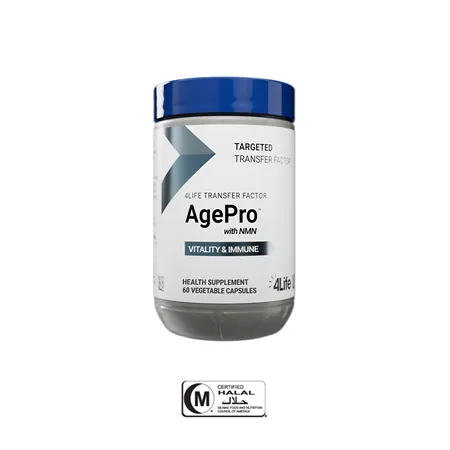
4Life AgePro™ Cellular Longevity
NMN, Calcium AKG, Quercetin & Milk Thistle for cellular energy, NAD+ support, and daily vitality.
Daily: Transfer Factor Plus (Immune Education)
Transfer Factor Plus — The Non-Negotiable
Two capsules with breakfast, two with dinner. This is the anchor of the protocol and the one supplement I would choose if I could only choose one. The Tri-Factor Formula (bovine colostrum + egg yolk transfer factors) educates NK cells and keeps immune readiness high regardless of what the day's training load does to my cortisol levels. The Cordyvant Complex — Cordyceps sinensis, Maitake, Shiitake, and Zinc — adds additional NK cell support and adaptogenic resilience. After 12+ months on Transfer Factor Plus daily, I've tracked a consistent improvement in my sick days per quarter versus the two years prior.
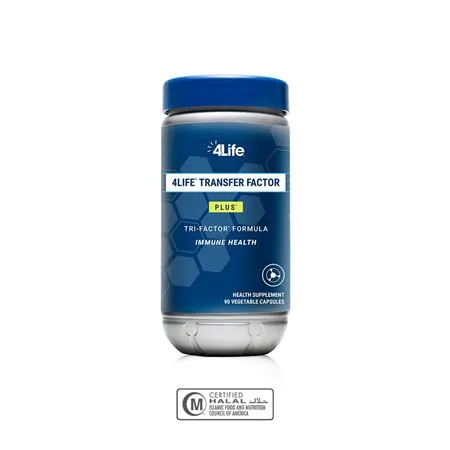
4Life Transfer Factor Plus Tri-Factor Formula
Premier immune education supplement combining transfer factors with Cordyvant mushroom complex. NK cell activity support backed by peer-reviewed research.
Post-Hard-Session: RioVida (Antioxidant Recovery)
RioVida — The Post-Workout Shield
60ml immediately after my own hard training session — typically my 2PM workout. This is not daily; it is targeted to the highest-demand recovery window. RioVida is a liquid combining transfer factors with an extremely high-ORAC superfruit blend: acai, pomegranate, blueberry, and elderberry. The rationale is twofold: the transfer factors bridge the NK cell dip during the open window, while the superfruits neutralize the reactive oxygen species surge that occurs in the 30 minutes following intense training. The liquid format also absorbs faster than capsules — which matters for post-workout, when you want the antioxidant effect as quickly as possible during peak ROS production.
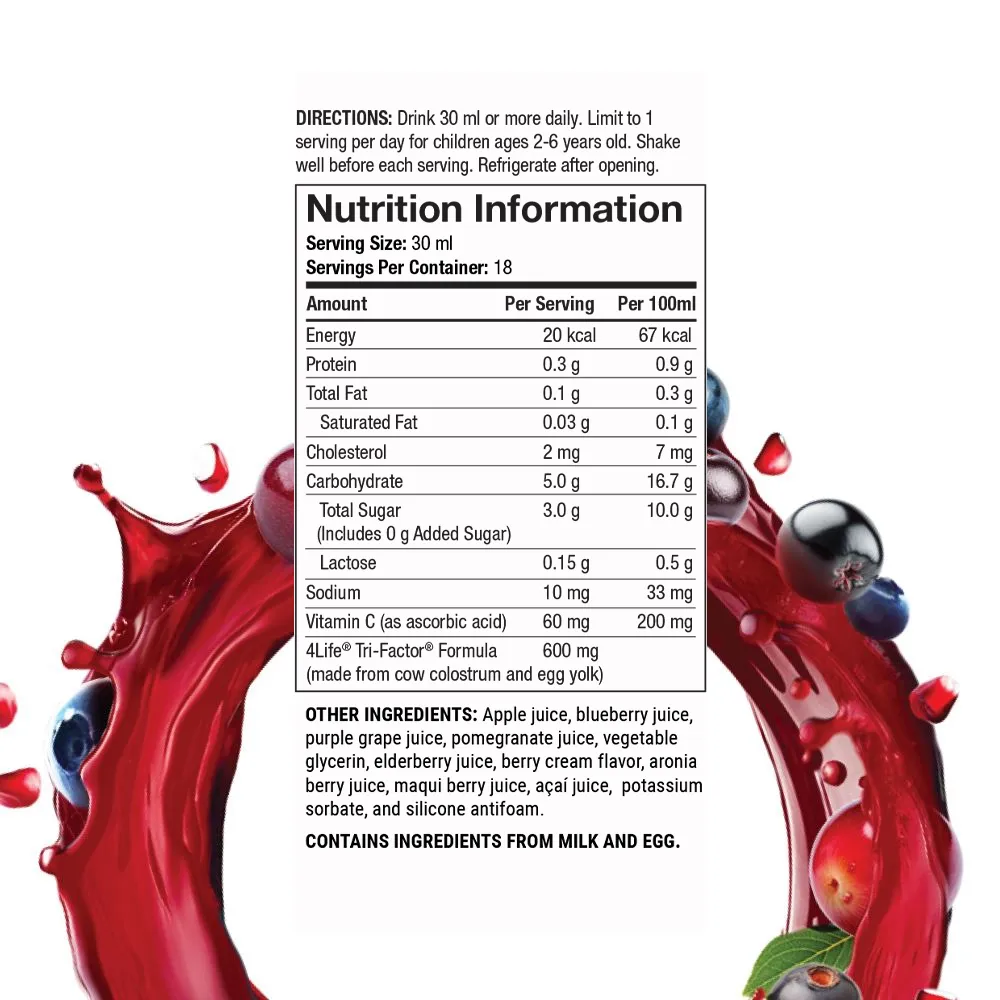
RioVida Liquid Antioxidant
Transfer Factor + acai, pomegranate, blueberry, elderberry. Post-workout antioxidant recovery in liquid form — fast absorption during the open window.
Weekly Timing: Structuring Around Hard Days
The protocol above is my daily baseline. On weeks with particularly high training demand — HYROX-style sessions, long run weekends, or weeks where I'm covering additional client sessions — I time my RioVida use specifically around those hardest days rather than using it daily. This keeps costs reasonable while maximizing the protocol's effect exactly when the open window is deepest.
On rest days or lighter weeks, Transfer Factor Plus alone is sufficient to maintain baseline immune education. RioVida is the targeted spike for peak recovery demand. This is the same logic as periodized training: not every day has to be maximum effort, and neither does every day have to include every supplement.
What About Vitamin C, Zinc, and Echinacea?
I want to be honest here because the supplement industry is full of noise and I'd rather you have accurate expectations.
| Supplement | Primary Mechanism | Addresses NK Cell Drop? | Long-Term Daily Use? | Verdict for PTs |
|---|---|---|---|---|
| Vitamin C | Antioxidant, collagen synthesis | No direct effect | Yes (within tolerable limits) | Useful add-on; not the core solution |
| Zinc | Enzyme cofactor; immune signaling | Indirect (supports T cell function) | Yes (avoid excess — toxicity risk above 40mg) | Good if deficient; not targeted enough |
| Echinacea | Reduces cold duration once symptomatic | No | Not recommended (evidence for cycling use) | Reactive, not preventive; not ideal for daily use |
| Transfer Factor Plus | NK cell education; immune memory transfer | Yes — directly | Yes — designed for it | Core protocol for PTs; addresses root cause |
| RioVida | Antioxidant + transfer factor (dual action) | Yes — via transfer factors | Yes (targeted post-workout use is optimal) | Best post-training recovery tool in this stack |
I don't tell clients to throw away their vitamin C. Vitamin C from food is genuinely valuable and I encourage good dietary sources — jambu, guava, papaya, which are abundant and cheap in Singapore. Supplemental vitamin C at 500mg/day adds useful antioxidant support, especially when diet is inconsistent during heavy training periods.
But if you are a personal trainer asking what to prioritize for immune resilience specifically, Transfer Factor Plus plus targeted RioVida covers more ground — with more direct relevance to the Open Window Effect — than any combination of the standard supplement stack.
For Clients Who Ask: Recommendations by Profile
One of the most common situations I face as a trainer is a client asking me what supplements they should take. My answer varies based on their profile, goals, and training level. Here's how I frame it for different types of clients:
Endurance Athletes
Highest open window risk — especially post-long-run or race. Transfer Factor Plus daily + RioVida on long run days and race week. AgePro if age 35+ and energy management is a concern.
Gym Beginners
Immune stress is real even for beginners — their bodies aren't yet adapted to training load. Transfer Factor Plus is the single best starting point. RioVida optional for post hard sessions.
CBD Professionals
High cortisol from work + training = compounded immune cost. Transfer Factor Plus covers both stressors. AgePro addresses the energy and cognitive load of a demanding dual career-gym lifestyle.
Senior Clients (55+)
NK cell activity naturally declines with age — this is immunosenescence. Transfer Factor Plus becomes more important, not less, with age. I usually recommend the Classic formula over Plus for seniors starting out, then upgrading. AgePro is a strong recommendation for this group for NAD+ support.
Prenatal / Postnatal
I always defer to their obstetrician on supplements during pregnancy. Post-partum, once cleared for exercise, Transfer Factor is generally considered safe as a food supplement — but again, medical clearance first.
Competitive Athletes
No banned substances concern with any 4Life product. Transfer Factor Plus + RioVida stack is what I personally use and what I recommend for athletes training at high volumes year-round in Singapore's conditions.
The key framing I always use with clients: supplements don't replace training, sleep, or nutrition. They fill specific gaps that diet alone cannot cover — particularly when training demands are high and the immune system is under chronic stress.
Frequently Asked Questions
What immune supplements do Singapore personal trainers actually take?
Coach Umar's daily protocol consists of three 4Life products: AgePro (NMN for cellular energy) in the morning, Transfer Factor Plus (immune education and NK cell support) daily morning and evening, and RioVida liquid antioxidant targeted to post-hard-training sessions. This stack is chosen specifically to address exercise-induced immune suppression — not general wellness marketing. All products are food supplements with no banned substances.
Is Transfer Factor Plus safe to take every day long-term?
Yes. Transfer Factor Plus is based on transfer factor peptides derived from bovine colostrum and chicken egg yolk — compounds naturally present in food. It contains no steroids, stimulants, or WADA-listed substances. It is suitable for daily long-term use and is taken regularly by athletes, coaches, and health-conscious adults in Singapore. As with any supplement, consult your doctor if you have a specific medical condition or are on prescription medication.
Are 4Life products approved by HSA Singapore?
4Life products sold in Singapore are food supplements, not pharmaceutical drugs, and are therefore not subject to HSA drug registration. They are compliant with Singapore's food safety regulations under the Sale of Food Act. They contain no substances prohibited by the World Anti-Doping Agency (WADA) and are suitable for competitive athletes. Always disclose supplement use to your sporting federation if competing at an elite level.
Why do personal trainers in Singapore get sick more than other professions?
Personal trainers face compounded immune challenges: they train clients in shared gym environments all day (high pathogen exposure), then train themselves on top (exercise-induced immune suppression), in Singapore's year-round heat and humidity (which increases pathogen survival and physiological stress). There is no off-season and no seasonal immunity reset. This makes proactive immune support an occupational necessity, not an optional add-on.
What is the best immune supplement for personal trainers in Singapore?
For personal trainers specifically, the criteria are: directly addresses NK cell activity, safe for daily long-term use, no banned substances, no stimulants, and evidence-based. Transfer Factor Plus meets all of these. In peer-reviewed research, 4Life's transfer factor formulas have shown up to 283% increase in NK cell cytotoxic activity — the highest figure recorded for any nutritional supplement in that research category. Combined with RioVida for post-training antioxidant recovery, this stack addresses the root causes of exercise-induced immune suppression more directly than standard vitamin C or zinc supplementation.