The Runner's Knee Problem: Why Singapore Marathoners Need Collagen (Not Just Stretching)
Runner's knee in Singapore is worsened by hard surfaces and year-round heat — TF Collagen taken 30–60 minutes before training with vitamin C provides cartilage-rebuilding peptides at the moment of peak absorption.
- Timing is critical: collagen peptides must be taken 30–60 minutes before exercise for maximum synthesis
- Vitamin C is required for collagen cross-linking — take together with TF Collagen for full effect
- Singapore's hard concrete and tarmac increase knee joint stress compared to track or trail surfaces
- Dehydration in 28–34°C heat directly reduces synovial fluid quality around the joints
- Pair TF Collagen (pre-training) with TF Plus (post-training) for combined joint and immune protection
If you've ever Googled "runner's knee Singapore" at 11pm after your third run of the week, you already know that most of the advice you find — stretch more, foam roll more, rest more — doesn't actually fix what's broken. This article explains why, and what does.
Knee pain is the single most common running injury worldwide. But Singapore runners face a set of compounding environmental and logistical factors that make joint degradation faster and more stubborn here than almost anywhere else on earth. Understanding those factors — and the structural biology behind them — is what separates a runner who trains consistently for years from one who cycles in and out of injury every six months.
TL;DR — Quick Product Guide
- ▶Choose Transfer Factor Collagen if you have persistent knee or joint pain, or train more than 4 times per week on hard surfaces like tarmac or pavement. Take 30–60 minutes before training for maximum uptake into loaded tissue.
- ▶Pair with Transfer Factor Plus if you're also dealing with post-run illness, recurring upper respiratory infections after long runs, or heavy training blocks ahead of a race.
Why Singapore Runners Destroy Their Joints Faster Than Anyone Else
Ask a runner in London or Tokyo whether they train year-round and they'll pause. There's winter. There's snow. There's an off-season built into the climate whether they like it or not. Tissue gets a break. Inflammation resolves. Collagen fibres get time to remodel without the next training load arriving before the previous microtrauma has healed.
Singapore has no such natural pause. You're running on hard tarmac and concrete pavements in 31–34°C heat twelve months a year. Every kilometre you run creates compressive and shear forces on cartilage, tendons, and ligaments — and those forces are generating microtrauma continuously, with no seasonal rest to allow full structural recovery.
The heat factor deserves specific attention. Sustained thermal stress at temperatures above 30°C upregulates a family of enzymes called matrix metalloproteinases (MMPs) — specifically MMP-1, MMP-3, and MMP-13 — which are the enzymes your body uses to break down collagen. Research published in journals covering connective tissue biology has documented that heat stress meaningfully increases MMP enzyme activity in musculoskeletal tissue. In practical terms: you are chemically degrading your cartilage faster simply by training in Singapore's ambient temperature, before mileage even enters the equation.
Then there's the race calendar. Singapore runners aren't pacing themselves across a sparse annual schedule. The SAFRA Singapore Bay Run (August), Women's Run Singapore (November), AIA HYROX Singapore (November 27–29), and the BYD Singapore Marathon (December 4–6) all fall within a five-month window. Runners targeting two or more of these events have almost no structural recovery time between peak training blocks.
According to data compiled across multiple sports medicine databases including the British Journal of Sports Medicine, approximately 50% of runners report experiencing knee pain at some point in a given training year. In Singapore's conditions — year-round loading, tropical heat accelerating collagen enzyme activity, and a congested race calendar — the probability of joint issues for regular runners is not a question of if, but when.
What Collagen Actually Does (And Why Stretching Alone Won't Fix It)
To understand why stretching is not sufficient, you first need to understand what structure you're actually trying to protect. Collagen is the primary structural protein in your cartilage, tendons, and ligaments. It makes up 70–80% of the dry weight of articular cartilage — the smooth tissue that cushions the joint surfaces inside your knee. Without adequate collagen density and cross-linking in that matrix, cartilage loses its shock-absorbing capacity and begins to thin and erode under load.
The body synthesises collagen continuously, but this synthesis slows dramatically as you age. After age 30, collagen production declines at approximately 1.5% per year. By 40, you're producing roughly 15% less structural collagen annually than you were at 25. By 45, that gap widens further. The result is a net negative collagen balance — you're breaking it down faster than you're building it, even before running enters the equation.
Running adds a third variable. The mechanical loading of a 42km marathon generates more collagen breakdown than approximately three months of sedentary aging would produce. The MMP enzymes triggered by the impact forces, combined with the inflammatory cascade of a long training block, create a catabolic (breakdown) environment in connective tissue that your natural synthesis rate is structurally unable to compensate for on its own.
Stretching addresses none of this. Stretching improves range of motion in the muscle and lengthens the muscle-tendon unit temporarily. It can reduce the mechanical tension placed on a knee joint by tight quadriceps or hamstrings. Those are real benefits — but they are kinematic benefits. They don't rebuild collagen matrix, they don't slow MMP enzyme activity, and they don't increase fibroblast collagen synthesis. The analogy is useful: stretching is like oiling a worn gear. Collagen supplementation is replacing the gear material itself.
Why Food Isn't Enough — The Absorption Problem
The first objection most runners raise at this point is reasonable: "Can't I just eat bone broth or more chicken? I don't need a supplement." The answer depends on what you're trying to achieve and how efficiently your body can extract and deploy dietary collagen.
The challenge is that collagen is a large, triple-helical protein molecule. Consuming it whole — as you would from bone broth or gelatin — requires your digestive system to break it down into constituent amino acids, which are then absorbed and potentially reassembled into new collagen tissue. But the reassembly step isn't guaranteed. Those amino acids compete for uptake with every other protein you've consumed, and the signals directing them specifically toward joint collagen synthesis are weak without a targeted stimulus.
| Source | Collagen Type | Absorption | Bioavailability |
|---|---|---|---|
| Chicken bones / bone broth | Type I/III | Low (large molecules) | ~15–25% |
| Gelatin powder | Type I | Moderate | ~30–40% |
| Hydrolysed collagen peptides | Type I/III | High (di/tripeptides) | ~90%+ |
| 4Life Transfer Factor Collagen | Type I/III + TF molecules | Optimized | Superior |
The critical differentiator in supplemental collagen is the size of the molecule being absorbed. Hydrolysed collagen peptides — broken into short chains of two or three amino acids (di- and tripeptides) — are absorbed intact across the intestinal wall and can be detected in the bloodstream and synovial fluid within hours of consumption. This means they reach joint tissue in a form the body can directly use for local collagen synthesis, rather than being dispersed into the general amino acid pool.
4Life Transfer Factor Collagen goes further by combining hydrolysed collagen peptides with Transfer Factor immune molecules. This matters specifically for joint recovery: chronic low-grade inflammation in and around a damaged knee joint actively suppresses the fibroblast cells responsible for collagen synthesis. The Transfer Factor molecules work to modulate that inflammatory environment — not by suppressing immune function, but by educating immune cells to respond more precisely. The result is a formulation that simultaneously provides the structural raw materials for collagen rebuilding while supporting the cellular environment in which that rebuilding can actually occur.
What's in 4Life Transfer Factor Collagen
Understanding the ingredient rationale helps you use the product correctly and set realistic expectations for what it does and when.
Hydrolysed collagen peptides (Type I and III) form the structural backbone of the formula. Type I collagen is the dominant protein in tendons and bone. Type III collagen is found in cartilage and blood vessel walls and is particularly relevant for the early stages of tissue repair. The hydrolysed format — broken into short peptide chains — is the form with documented >90% bioavailability and the ability to reach joint tissue directly.
Transfer Factor molecules are derived from bovine colostrum and chicken egg yolk. These are not immune stimulants in the conventional sense — they function as immune educators, transferring information about known threats and inflammatory patterns from animal immune systems to human Natural Killer cells and T-lymphocytes. In the context of joint recovery, the relevant mechanism is the modulation of pro-inflammatory cytokines (particularly IL-1β and TNF-α) that, when chronically elevated in joint tissue, directly inhibit collagen synthesis by fibroblasts.
Co-factor vitamins complete the formula. Vitamin C (ascorbic acid) is a non-negotiable co-enzyme for collagen synthesis — it is required for the hydroxylation of proline and lysine residues that give collagen its structural stability. Many athletes who try standard collagen peptide powders without adequate Vitamin C see limited results for exactly this reason. The formula also includes Vitamins A and E and Biotin, which support skin and connective tissue integrity.
The 2-Pack format provides approximately two months of supply at the recommended daily dose — which is intentional. Collagen supplementation is not an acute intervention. Meaningful structural changes in cartilage and tendon collagen density require consistent daily intake over 8–12 weeks minimum. The 2-Pack is sized to cover the minimum effective protocol duration.
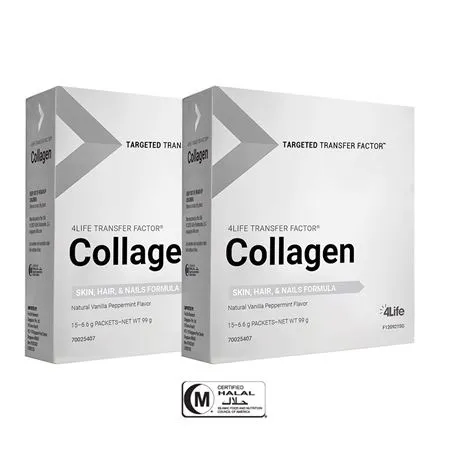
4Life Transfer Factor Collagen (2-Pack)
Hydrolysed collagen peptides (Type I/III) + Transfer Factor immune molecules + Vitamins A, C, E & Biotin. Two months supply at daily dose — the minimum effective protocol for joint structural benefit.
The Singapore Race Calendar — When to Start Your Collagen Protocol
The most common mistake Singapore runners make with collagen supplementation is starting too late. A week before the marathon, or the day knee pain appears, is not the right entry point. Collagen takes 8–12 weeks to show meaningful structural benefit at the tissue level — the fibroblast cells responsible for collagen synthesis need time to receive, process, and act on the supplemental peptide signal before the new collagen matrix is laid down and integrated into existing tissue.
The practical implication: work backwards from your race date. If you're running the BYD Singapore Marathon in December, you needed to start in October at the latest. If you're targeting HYROX in November, September is your starting point. Use the table below as your planning reference for the remainder of the Singapore 2026 race calendar.
| Race | Date | Start Collagen By |
|---|---|---|
| SAFRA Singapore Bay Run | August 2026 | June 2026 |
| Women's Run Singapore | November 2026 | September 2026 |
| AIA HYROX Singapore | Nov 27–29, 2026 | September 2026 |
| BYD Singapore Marathon | Dec 4–6, 2026 | October 2026 |
Why 8–12 weeks? Collagen turnover in cartilage is slow by biological design — cartilage is avascular (no direct blood supply), which means nutrient delivery relies on diffusion through synovial fluid rather than direct circulation. This is also why cartilage injuries heal so poorly compared to muscle tears: there are no blood vessels rushing repair cells to the site. Hydrolysed collagen peptides reach synovial fluid via the bloodstream after absorption, so supplementation does work — but it works on cartilage's slower timeline, not muscle's faster one.
The Complete Runner's Joint Protocol
For runners dealing with persistent knee pain or managing high training volumes, the most effective approach combines structural rebuilding (collagen) with immune environment support (Transfer Factor Plus). Here is the evidence-informed daily protocol.
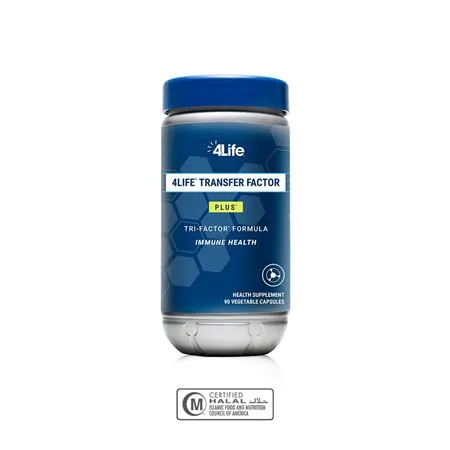
4Life Transfer Factor Plus Tri-Factor
Transfer Factor immune education + Cordyvant™ mushroom complex + Zinc. Supports the immune environment during heavy training, reducing the inflammatory suppression that impairs collagen synthesis.
How Much Does It Cost vs Physio?
The comparison that most Singapore runners find clarifying is a direct cost analysis against physiotherapy — the conventional intervention for runner's knee and joint pain. The numbers are instructive.
A single physiotherapy session in Singapore currently costs between $80 and $150, depending on the clinic and whether it's a first consultation or a follow-up. A standard treatment course for runner's knee — which typically involves 4–8 sessions addressing gait analysis, taping, manual therapy, and exercise prescription — runs between $480 and $900 for the course. Many runners return for multiple courses when the underlying structural deficit isn't addressed.
| Intervention | Cost | Duration | Daily Cost |
|---|---|---|---|
| Single physio session | $80–$150 | 1 session | $80–$150 |
| 6-session physio course | $480–$900 | 6 visits over ~6–8 weeks | $11–$21/day |
| Transfer Factor Collagen 2-Pack | $119 | 2 months supply | ~$2.00/day |
| Full protocol (Collagen + TF Plus) | $247 | ~2 months | ~$4.10/day |
The physio comparison is not an argument against physiotherapy — it's an excellent intervention and a good physiotherapist addressing biomechanical causes of runner's knee is valuable. The point is that collagen supplementation addresses a complementary mechanism (structural protein deficit) that physio does not, at a cost of approximately $4.10 per day for the full protocol versus $80 or more per physiotherapy visit.
For runners who are currently injury-free but training consistently, collagen supplementation as preventive structural maintenance is arguably the highest-value investment in your training budget. Maintaining the collagen matrix before it degrades is cheaper and faster than rebuilding it after it has. A knee that never develops runner's knee costs nothing to treat.
The Singapore running community is one of the most motivated, well-informed, and race-ready in Asia. The missing piece for most runners isn't training volume, programme design, or even physiotherapy — it's addressing the structural protein deficit that year-round tarmac training and tropical heat create in the joint tissue. Start the collagen protocol at least 8 weeks before your target race, pair with Transfer Factor Plus during your heaviest training weeks, and give your joints the structural foundation your training deserves.
Start Your Runner's Joint Protocol
BYD Singapore Marathon — December 4–6, 2026. Start collagen by October for full structural benefit.
All purchases via this authorized distributor link automatically apply wholesale member pricing — 20–30% off retail.